


Contents
B2B outreach is one of the most effective ways to specifically target decision-makers in the IT and software sectors without having to rely solely on ads or inbound leads. Especially when it comes to solutions that require explanation and lengthy decision-making processes, inbound marketing alone quickly reaches its limits: After all, many conversations only start when you take the initiative yourself.
This is exactly where B2B outreach comes in. You reach out directly to relevant decision-makers and establish contact based on a specific opportunity that is truly relevant to their company. With thoroughly researched contacts and a clearly defined approach, you create a sales channel that can be measured and systematically developed—and that makes it possible to schedule initial meetings rather than leaving them to chance.
Our guide shows you how to implement B2B outreach in the IT sector systematically and efficiently.
Here's How Effective B2B Outreach Works in Practice
The effectiveness of structured B2B outreach in the IT sector is evident not only in the number of clicks but also in the responses.
When decision-makers respond on an equal footing, schedule meetings, or actively request materials, it’s clear that the approach addresses a real need. This is exactly the kind of feedback our clients receive—from IT directors at medium-sized companies to CEOs of larger software and technology firms.
Real responses from ongoing B2B outreach campaigns (selection)
REPLY TO EMAIL
's customers receive these responses
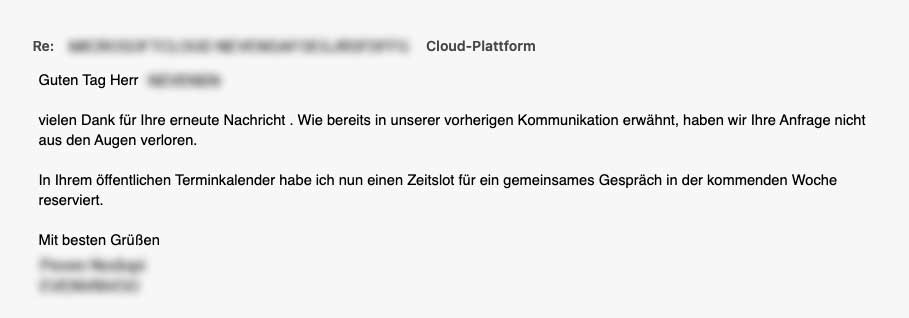
CEO - IT company with $150 million in revenue
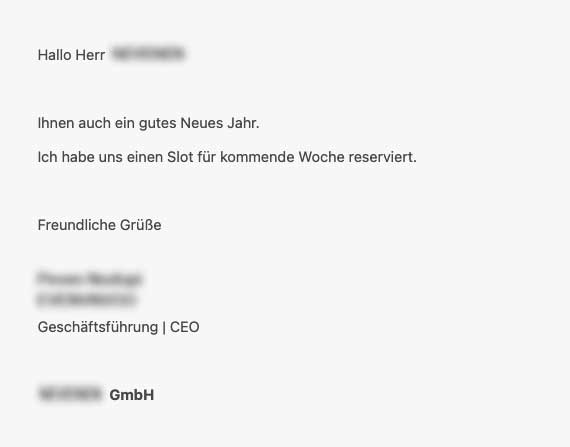
Microsoft IT Services - for Small and Medium-Sized Businesses
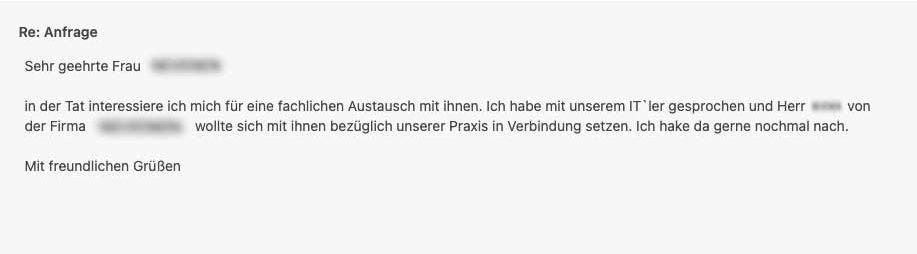
Software in the healthcare sector

CEO - $250 million in revenue from Hamburg
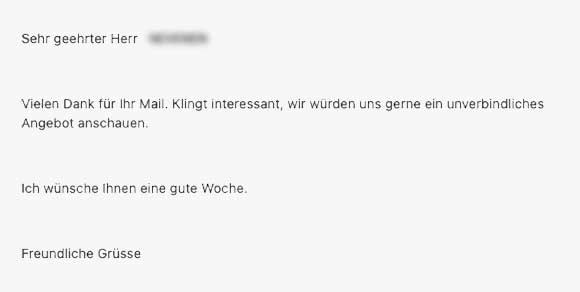
IT Infrastructure for Small and Medium-Sized Businesses
In the next step, we'll take a look at what defines B2B outreach—and which key elements actually determine responses, appointments, and the pipeline.
Key Points at a Glance:
- B2B outreach only works when it’s structured: Clean data, clear target audiences, and defined processes determine whether initial contacts will lead to qualified initial meetings.
- Relevance trumps reach: Decision-makers don't respond to mass messaging, but rather to context-specific communication that offers clear benefits for their specific situation.
- Follow-ups determine whether a meeting takes place: Most conversations don’t start with the first message, but rather through a structured sequence and follow-up process involving multiple touchpoints.
What is B2B Outreach?
B2B outreach refers to proactively reaching out to potential customers—usually via email and LinkedIn—to arrange an initial conversation or meeting without an existing business relationship. B2B outreach specifically targets decision-makers whose situations and pain points have been researched in advance, rather than randomly working through contact lists.
Why is B2B outreach so effective?
Outreach is in B2B IT marketing because it allows you to make direct contact with relevant decision-makers while also being easily managed. Instead of hoping for visibility or investing large budgets in ads, this approach gives you active, controllable access to potential customers. This is precisely what proven B2B sales outreach best practices are based on.
-
A Direct Line to Decision-Makers:
Outreach bypasses traditional marketing channels and specifically targets individuals with technical and business responsibilities—such as CTOs, CIOs, or Heads of IT. This significantly shortens the path from initial contact to a qualified conversation. -
Cost-effectiveness:
Compared to ads or lead generation by phone, B2B outreach incurs low ongoing costs. Emails, sequences, and follow-ups can be automated without incurring additional costs per contact. -
Scalability:
With the right tools, you can send several hundred relevant requests per month. The process scales without compromising quality or personalization. -
Measurability & Optimizability:
Opens, replies, dates, and bounces make every campaign transparent. Based on this data, you can test subject lines, content, and target segments in a targeted manner and continuously improve them.
B2B Outreach: Step by Step, from the Data Set to the Follow-Up
A professional approach to targeted direct outreach in the IT sector follows a clear, documented B2B outreach strategy. Instead of one-off initiatives, the focus is on structured B2B outreach campaigns that you can measure, manage, and automate in a targeted manner.
1. Lead Generation and Data Preparation
The first step is to establish a clearly defined Ideal Customer Profile. To do this, IT and software companies identify which industries, company sizes, regions, and roles are relevant. Typical target audiences include CIOs, Heads of IT, CTOs, and those responsible for infrastructure and digital transformation.
Based on this, you can identify relevant contacts—for example, through LinkedIn, company websites, industry directories, or specialized B2B data providers. Good data sets include additional information such as technologies in use, current hiring activity, or ongoing initiatives, which provide insights into specific challenges.
Technical quality is also crucial for effective outreach. You should prioritize individual decision-makers’ email addresses over generic group inboxes. Before sending, you should also verify the email addresses to avoid high bounce rates and damage to the sender’s domain.
It’s not about getting as many contacts as possible, but about finding the right leads for IT solutions that require explanation. This is especially true when it comes to lead generation for IT and software companies , data quality is the key factor in the success of B2B sales outreach.
Leadeffect works with verified data sources and combines firmographic, technographic, and trigger data. This allows us to target only those contacts with whom there is a realistic professional and business fit—without wasting resources on irrelevant leads. The result: noticeably higher response and appointment rates, a more stable pipeline, and an outreach strategy based not on hope, but on reliable data and clear relevance.
2. How to Write the Perfect Outreach Email
A good B2B outreach email isn’t a sales pitch—it’s a conversation starter. It’s intentionally kept brief, addresses a specific context, and articulates a clear problem hypothesis rather than explaining the sender’s offering in detail. Successful teams avoid using email templates in B2B outreach and instead flexibly tailor their message to the recipient’s role, the situation, and the specific context.
The opening establishes a clear connection to the company or the recipient’s situation. This could be a tech stack in use, an open position, a new product, or an ongoing project. Based on this, describe a potential problem that realistically fits the situation—not in general terms, but specifically.
In the next step, you’ll outline the results other companies in a similar situation have achieved or the potential that exists in general. The call to action remains low-threshold. This aligns with common B2B email outreach best practices, which deliberately prioritize relevance and context over the request for a meeting.
3. Follow-up
Most conversations don’t start with the first message. A structured follow-up process is therefore an integral part of any professional outreach strategy. It’s common to have several points of contact over the course of one to two weeks, with each message introducing a new aspect.
Especially in B2B cold outreach and cold email outreach for B2B sales, a well-structured follow-up determines whether or not an initial contact leads to a conversation.
The first follow-up message refers to the previous message and provides a matter-of-fact reminder of the contact. Subsequent messages provide additional context, such as a specific idea, a brief case study, or a different perspective on the topic. The message concludes with a carefully worded closing that leaves the door open but brings the active outreach to a close.
As a specialized B2B outreach agency, Leadeffect helps IT and software companies not only implement outreach but also build it into a scalable, robust B2B sales outreach service—from the data foundation to ongoing optimization. Instead of relying on chance and one-off campaigns, we create a measurable process that consistently generates appointments and pipeline. If you want your outreach efforts to be predictable, you’ve come to the right place.
B2B Outreach: Analysis & Optimization with Clear KPIs
Without accurate tracking, B2B outreach remains a matter of chance. Only when tools and KPIs work together can you tell whether your initial outreach and follow-ups actually lead to meetings. This is exactly where it’s determined whether your outreach will become scalable.
Tools
Systematic B2B IT outreach requires a streamlined setup involving email distribution, data, and analysis. What matters most is not the number of tools, but how well they integrate with one another.
- Email & Outreach Automation: Tools such as ActiveCampaign, Lemlist, and Woodpecker manage sequences, follow-ups, and A/B tests. They ensure consistent email delivery and reduce manual effort.
- Data & Enrichment Tools: Solutions such as Apollo or specialized B2B data providers supply contacts and relevant additional information, such as details on tech stacks or hiring activity.
- CRM & Analytics: The CRM system links the initial contact, the response, and the appointment. Analytics shows which campaigns contribute to the pipeline—and which do not.
Leadeffect handles setup, deliverability checks, and monitoring to ensure that Outreach runs smoothly and results remain transparent.
KPIs
KPIs not only show whether outreach is generally effective, but also highlight where in the process optimization is needed. They are a key component of any robust B2B outreach strategy.
- Open rate: This provides insight into whether deliverability and subject lines are effective. If messages aren't being opened, the cause is often more likely to be related to the technical setup or the subject line than to the actual content of the message.
- Reply Rate: The reply rate is the most important indicator of relevance. It shows whether the message, context, and problem hypothesis are understandable and interesting to the target audience.
- Appointment Rate: This metric directly links outreach efforts to qualified meetings. It shows how many responses actually lead to initial meetings and thus make a real contribution to the pipeline.
- Bounce Rate: The bounce rate indicates problems with data quality or technical configuration. Excessively high values can damage the domain's reputation over the long term and, as a result, its overall deliverability.
Based on these metrics, you can fine-tune subject lines, entry points, CTAs, sequences, and target segments in a targeted manner. This makes B2B outreach more predictable—and consistently effective.
B2B Outreach: 3 Strategies to Stand Out from the Competition
In IT marketing , you’re not competing for attention—you’re competing for relevance. Decision-makers receive numerous emails and LinkedIn messages every day. Those who succeed are the ones who provide context, understand the other person’s situation, and avoid relying on standard pitches.
-
Truly Understanding Customers:
Successful outreach doesn’t start with your own offering, but with the role of the other party. Which KPIs are relevant? Where do risks, pressure, or conflicting goals arise? Those who understand these dynamics and speak the language of the target audience are perceived as conversation partners, not as salespeople. -
Think of your product in the context of the customer’s problem:
What matters isn’t what your product can do, but what specific problem it solves in a particular situation. Effective outreach messages articulate clear problem hypotheses for a specific person at a specific company and highlight which risk is mitigated or which goal becomes achievable. Feature lists are no substitute for relevance. -
Build relationships instead of just collecting contacts:
Effective outreach relies on preparation and genuine interest. Research, attentive listening, and personalized communication build trust—across multiple touchpoints. Email, LinkedIn, and conversations complement one another and ensure that the person behind the address is seen as a person, not just a lead.
B2B Outreach: 6 Triggers That Boost the Response Rate
Triggers are specific signals that something is currently changing at a company or with a contact person. It is precisely during these phases that openness to new ideas is at its highest. The better you research these triggers and address them in your message, the higher the likelihood of a response. These 6 triggers are particularly common:
Technology Shift or IT Migration Projects
Technology changes, cloud migrations, ERP implementations, or security upgrades create a clear need for action and require budgets. Those who specifically reference such projects in outreach emails (e.g., through tech stack analysis or case studies) demonstrate substance and relevance.
Hiring Boom in the Tech or IT Consulting Team
A large number of open positions for developers, DevOps professionals, or consultants is a strong indicator of growth, capacity constraints, or scaling challenges. Effective outreach emails pick up on this signal and formulate hypotheses about issues related to time-to-hire, onboarding, or delivery capacity.
Product Launch or New Service
New products or services are usually a high priority internally. They bring with them new requirements for infrastructure, marketing, or processes. Outreach that focuses on specific launch announcements or roadmaps is timed to align with the target customer’s reality and is perceived as more relevant.
New Regulations or Compliance Requirements
Regulatory changes and new requirements are significantly increasing the pressure on decision-makers in the IT sector. Issues such as data protection, industry standards, and certifications are moving up the agenda. Outreach efforts that clearly identify risks and highlight potential solutions reach decision-makers at a time when they are paying closer attention.
Loss of visibility or leads
Significant drops in traffic, rankings, or leads—such as those following algorithm updates or campaign halts—serve as triggers for marketing and sales managers. If you can back up this trend with data, you’ll create a strong starting point for outreach conversations focused on lead generation and pipeline stabilization.
The contact person's personal trigger
Keynotes, podcasts, blog posts, or GitHub projects by the person you’re contacting are ideal conversation starters to show genuine interest and begin a conversation on equal footing. Instead of using generic platitudes, address the person specifically regarding their content or contributions.
B2B Outreach: Common Mistakes in Implementation
Many B2B outreach campaigns fail not because of the offer itself, but because of fundamental mistakes in execution. If you’re aware of these issues and avoid them, you’ll significantly increase your chances of getting responses and having meaningful conversations:
-
Lack of Personalization:
Generic mass emails that make no reference to the company or the recipient’s role come across as interchangeable. Successful personalized B2B sales outreach isn’t achieved through rigid, standardized text, but through context-specific adjustments tailored to the recipient’s role, situation, and occasion. -
Overly Aggressive Selling:
Decision-makers first expect relevance and an understanding of their situation. Best practices in B2B email outreach therefore focus on conversation starters rather than sales pressure during the initial contact. -
Wrong Target Audience:
Without a clearly defined Ideal Customer Profile, messages end up reaching people who lack decision-making authority or have no need for your product or service. This not only lowers the response rate but also damages your brand’s reputation in the long run. -
No follow-ups:
Many responses only come after several points of contact. Especially in B2B cold outreach, structured follow-ups are crucial for staying visible without coming across as pushy. -
Poor Deliverability:
Unverified contact lists, failure to warm up the domain, or incorrect sending configuration lead to high bounce rates. This results in spam issues and decreased visibility—even for emails with good content.
Make B2B outreach an integral part of your lead generation strategy
When implemented correctly, B2B outreach in the IT and software sectors is an effective tool for securing qualified initial meetings with relevant decision-makers. Rather than relying on chance or mere visibility, it creates a structured process based on clean data and context-rich messaging—one that is measurable and can be systematically refined.
Leadeffect supports IT and software companies precisely at this point. With precise contact selection, proven outreach messages, technical implementation—including deliverability management—and ongoing optimization based on clear KPIs, we make B2B outreach a predictable part of your lead generation strategy.
If you want your outreach efforts to reliably generate appointments and build your pipeline in the future, let’s talk aboutabout how we can set this up in a structured way for your company.